The FCA published the Mills Review this month: 147 pages, led by Sheldon Mills, drawing on 140 written submissions from across financial services, technology, academia and consumer groups. Its question was how AI will transform retail financial services by 2030 and beyond. Its answer should be required reading for anyone making lending decisions, or building the systems that support them.
The short version: the future the FCA describes is one our customers are already building towards. If you're a lender, broker or credit team wondering what to do about it, the practical starting point is smaller than you'd think, and it's something we can show you in a 30-minute call.
The central finding is a shift in kind, not just degree. Financial services today are largely human-led and episodic: a customer applies, a firm assesses, a decision gets made. The review describes a move towards services that are AI-enabled, continuous and delegated, with AI embedded across underwriting, compliance, claims and servicing inside firms, and, on the consumer side, agents that search, compare and eventually act on people's behalf. It maps this as an autonomy spectrum: humans move from performing tasks themselves, to collaborating with AI, to approving what AI prepares, to observing systems that act within agreed limits.
That's the headline. But the more useful material for lenders and intermediaries sits underneath it.
The binding constraint isn't the models
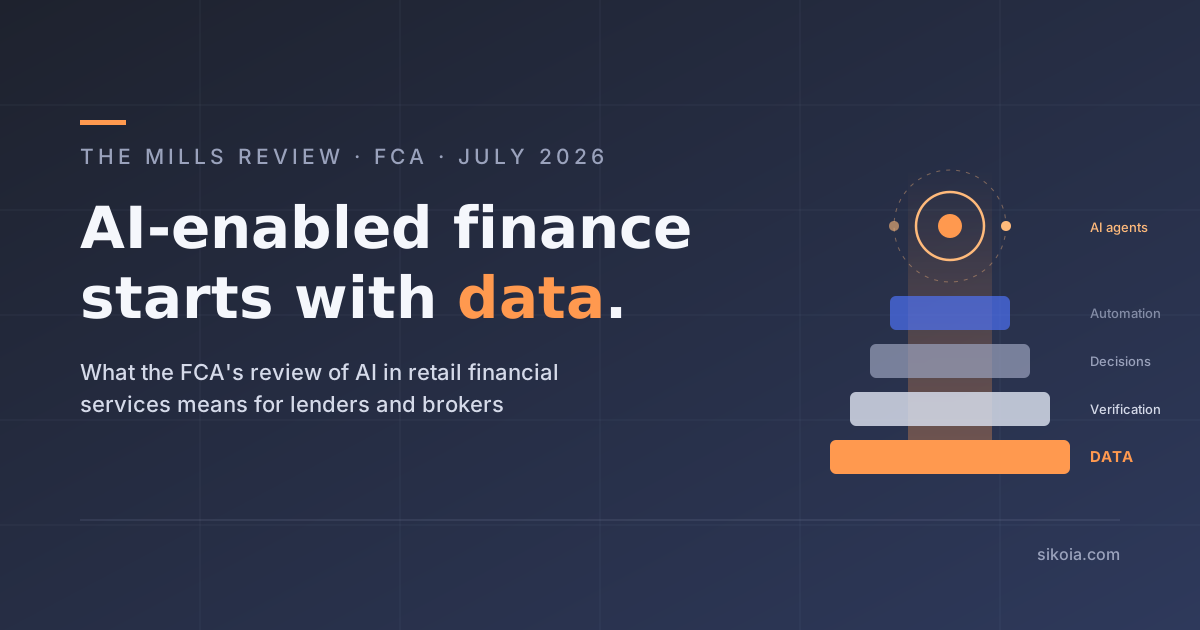
For all the attention on agents and frontier capability, the review keeps returning to something less glamorous. In its building blocks for agentic finance, the first entry is data, with a blunt assessment: "Data quality and availability remain a binding constraint on scale." Elsewhere, it states plainly that data quality is foundational, both for firms making AI-enabled decisions and for the regulator supervising them, describing a system shift towards trusted, traceable data in regulated financial services.
This matches what we see with lenders and credit teams every day. The ceiling on automation isn't usually the sophistication of the model. It's whether the customer data feeding it is complete, consistent and structured enough to be trusted, and whether the firm can evidence, after the fact, what the decision was based on. Incomplete data doesn't just slow assessments; it makes every layer of automation built on top of it harder to defend.
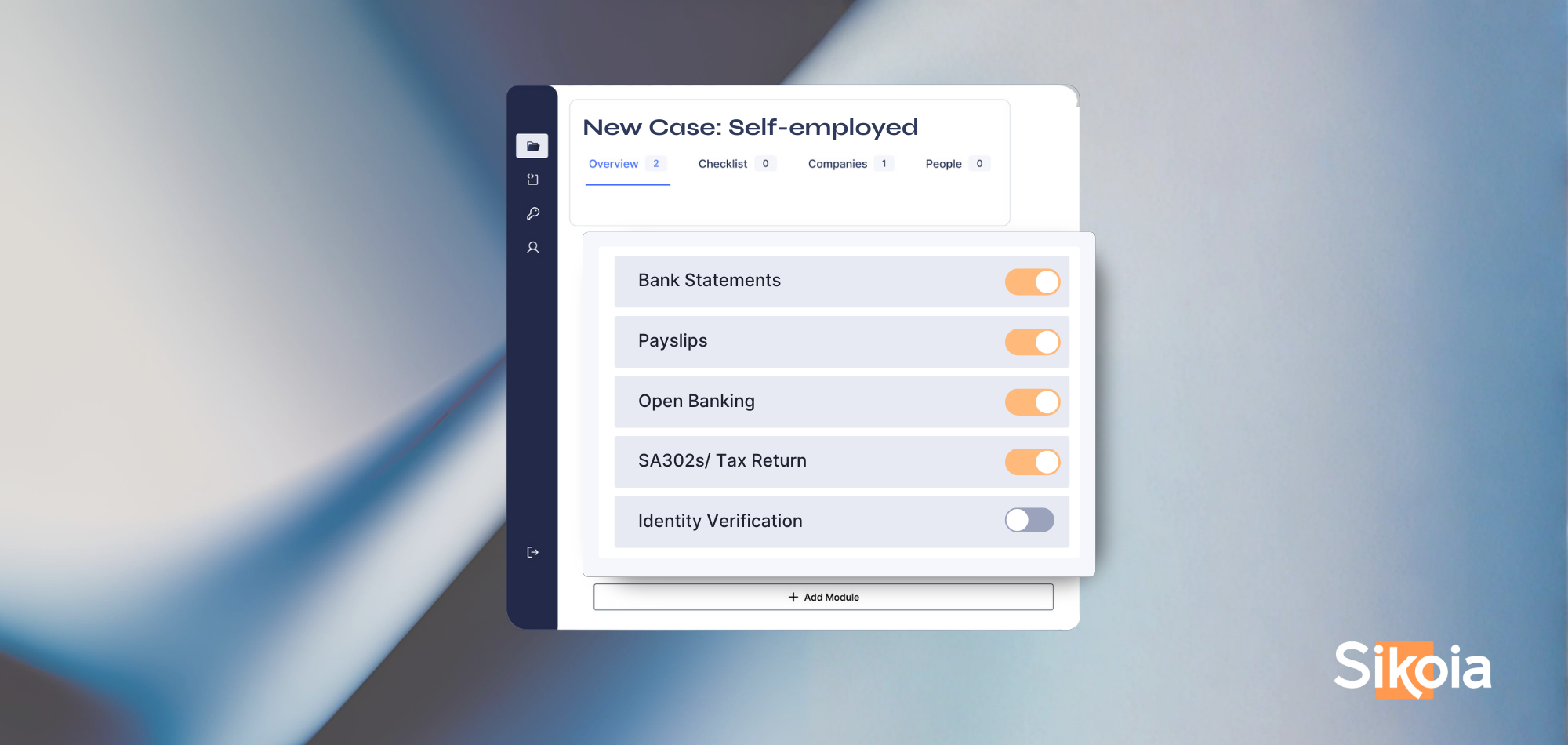
This is precisely the gap Sikoia closes. We aggregate customer data from the sources you already use, structure it into a single reliable view, and surface it at the point of decision, with a full audit trail behind every check. Teams using it are making faster assessments with fewer touchpoints, and evidencing them without the archaeology.
The review sharpens the stakes on the governance side too. It warns that it won't be enough to say a person remains "in the loop". Firms will need to be clear what that person is expected to do, what information they receive and when they can intervene. Oversight moves from periodic review to live monitoring. All of that presupposes decision data you can actually inspect. If you can't today, that's the conversation to have first, and one we have with credit and risk teams every week.
Consumer finance, described in familiar terms
When the review maps what AI does to consumer finance specifically, it lists: prequalification, broker-like comparison, and affordability and document automation. "AI may make consumer finance search, qualification and document handling more automated."
Reading that as a company that automates document review, income verification and affordability checks for lenders and brokers, the 2030 forecast looks a lot like a description of our current product. This isn't something you need to wait for or build yourself. The document-heavy middle of the lending journey (collecting, checking, verifying, structuring) is exactly what Sikoia automates today, and it typically goes live in weeks, not quarters.
Notably, the review does not predict the end of intermediation. Around 90% of first-time buyers still get their mortgage through a broker, and the FCA's own research found that trust, having a specific human to speak to in a complex, high-stakes process, is what sustains that. Its conclusion is that AI relocates intermediation rather than removing it. Our reading for brokers: the admin gets automated, and the trusted conversation is where the value concentrates. The brokers we work with start their day with complete, verified, pre-processed applications, and spend the hours that used to go on chasing documents on the client conversations that actually win business.
The fraud pressure is the other side of the same coin
The review's fourth system shift is a warning: AI makes fraud faster, cheaper and more persuasive. Deepfakes, synthetic identities and automated social engineering raise "the burden on firms to distinguish genuine customers from convincing deception." As application volumes and automation grow, verification can't remain a one-time box ticked at onboarding. Confidence in who you're dealing with, and in the documents they provide, has to be built into the journey itself.
That is, again, a data problem before it's anything else. Detection depends on strong identity attributes, consistent signals and data you can cross-check across sources, which is exactly what a unified view of the customer, built from multiple verified sources, gives you. Single-source checks are where convincing deception gets through.
Where to start
The Mills Review is measured. It doesn't ask firms to rush, and it finds the existing regulatory framework broadly sound. But its direction is unambiguous: the firms that will benefit from AI-enabled finance are the ones that get their data foundations right now. Trusted, structured, traceable customer data isn't the compliance afterthought of that future. It's the entry ticket.
That's the problem Sikoia exists to solve: aggregating customer data from multiple sources, verifying documents and income automatically, and putting reliable, auditable information in front of decision-makers at the moment it's needed. It's live with lenders and brokers today, it integrates with the systems you already run, and it doesn't require an AI transformation programme to get value from. Most teams see the difference in their first workflow.
Book a call to learn more here.


.png)





.png)


.png)


.png)


.png)


%20(2).svg)


